A rental car breakdown can quickly disrupt an otherwise enjoyable journey. Whether you're exploring unfamiliar countryside or driving between major cities, unexpected mechanical problems can create stress, delays, and uncertainty about who is responsible for repairs.
Fortunately, most established rental companies have procedures for handling vehicle breakdowns. Knowing what to do can help protect your safety, reduce inconvenience, and prevent unnecessary expenses.
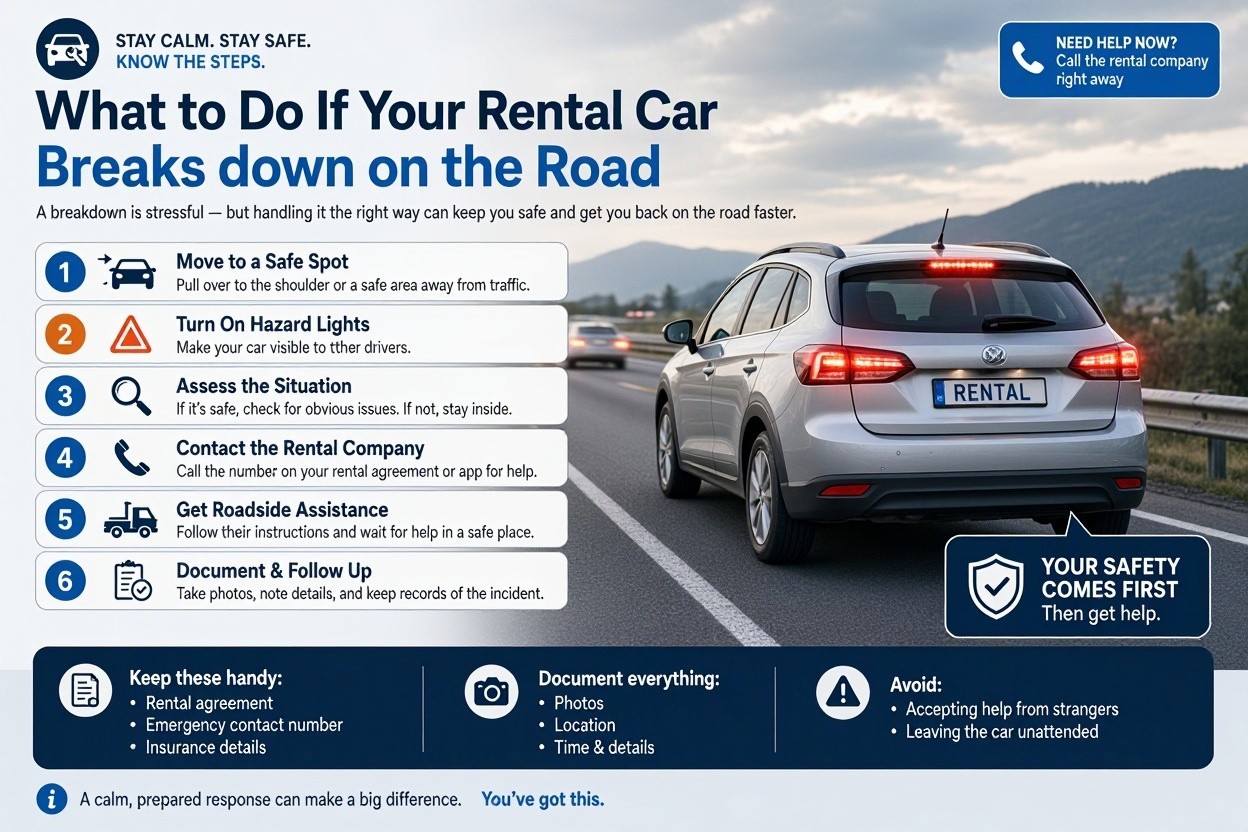
Move to a Safe Location
Your first priority should always be personal safety. If the vehicle develops mechanical problems while driving, avoid sudden braking or dangerous maneuvers.
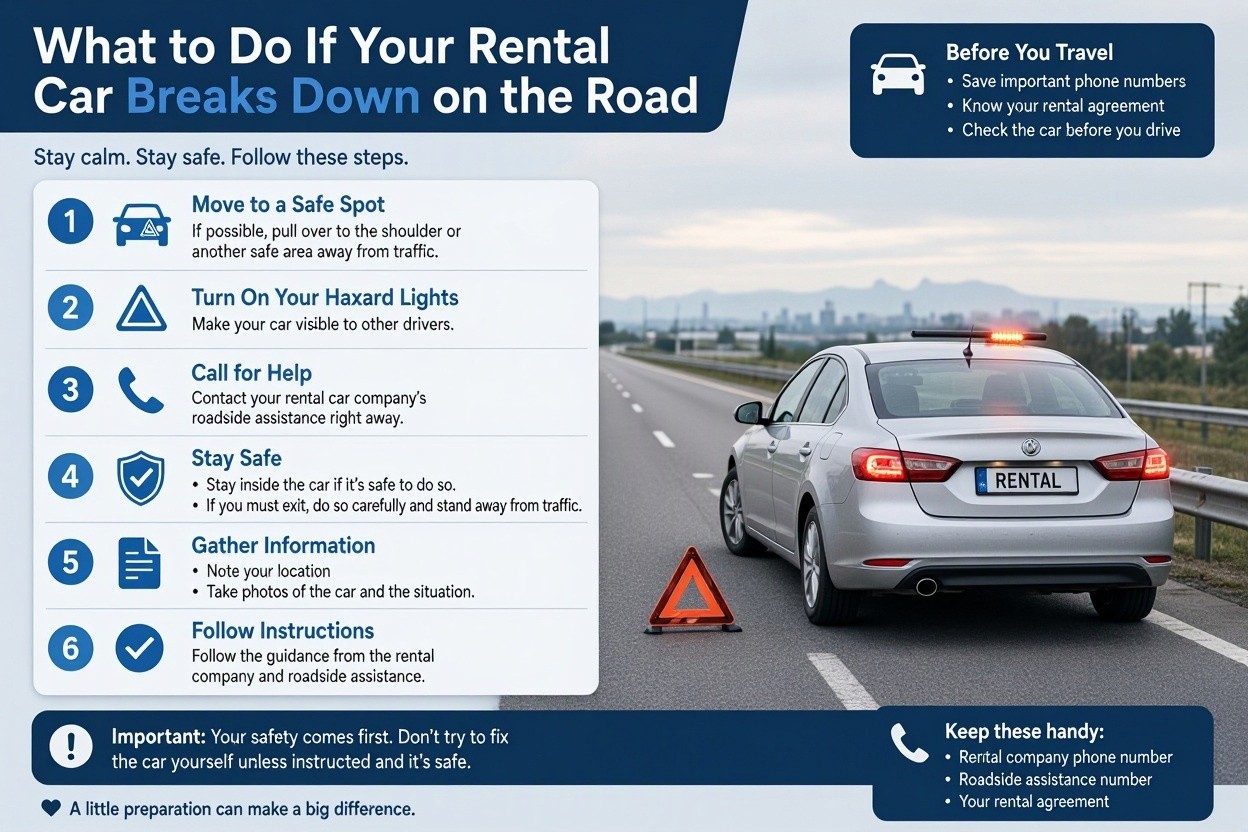
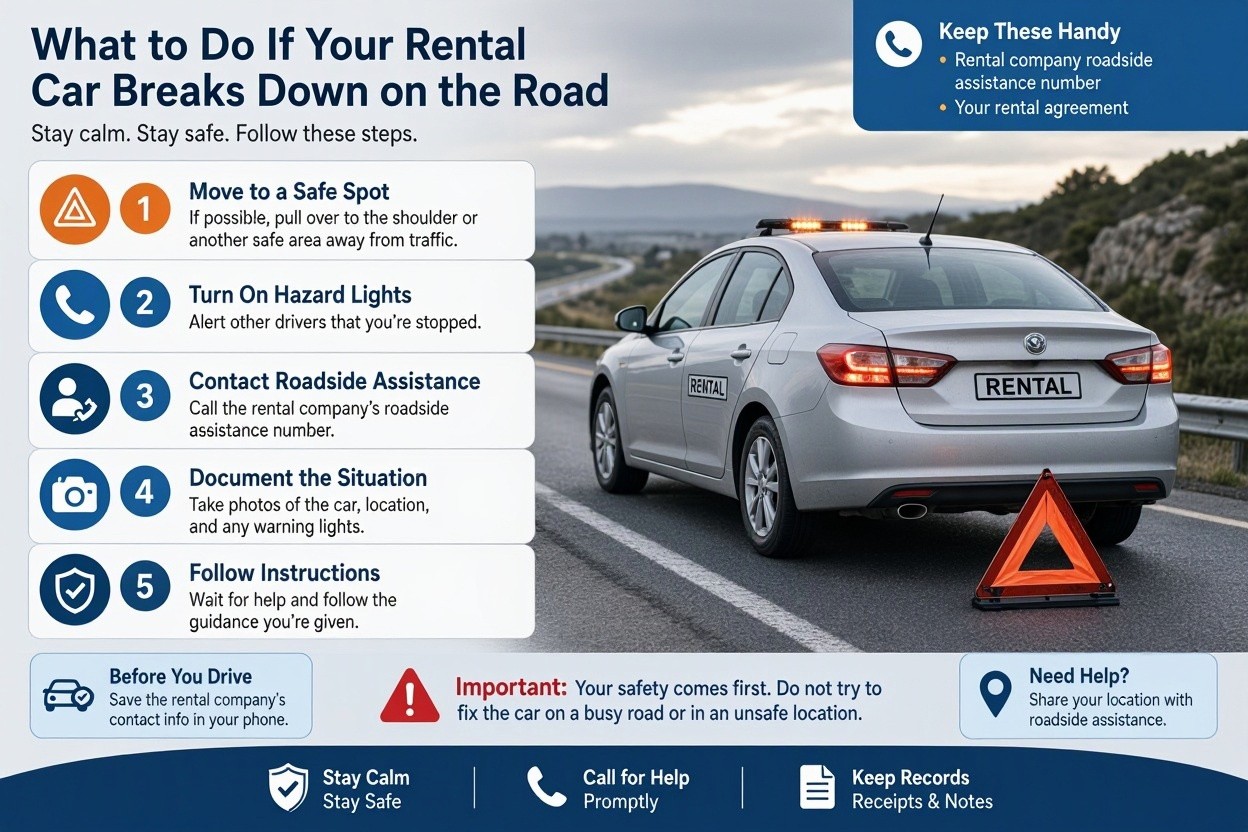
When possible, carefully move the car to a safe stopping area away from moving traffic. Activate the hazard warning lights and follow local road safety regulations.
If the vehicle stops on a highway, remain aware of surrounding traffic. In some situations, leaving the vehicle and waiting behind a safety barrier is safer, provided you can do so without entering traffic.
Call emergency services immediately if anyone is injured or the situation presents an immediate danger.
Identify the Problem Without Taking Risks
Once you are safe, try to identify the general nature of the problem. Common rental car breakdowns include flat tires, battery failures, overheating engines, and electrical malfunctions.
Pay attention to dashboard warning lights, unusual noises, smoke, or fluid leaks.
However, do not attempt complicated repairs or continue driving a vehicle that may be unsafe. Doing so could worsen the damage and create additional liability.
Contact the Rental Company Immediately
The rental company should generally be your first point of contact after ensuring everyone's safety.
Roadside assistance numbers are often printed on the rental agreement, vehicle documents, or company mobile application.
When contacting support, provide:
- Your rental agreement or reservation number.
- The vehicle's registration details.
- Your current location.
- A description of the mechanical problem.
- Information about warning lights or visible damage.
- Whether the vehicle can be driven safely.
Follow the company's instructions and request confirmation of any important arrangements.
Understand Roadside Assistance Coverage
Many rental companies provide assistance for mechanical failures that occur during normal vehicle use.
Depending on the agreement, services may include towing, battery assistance, tire replacement, or transportation to another rental location.
However, not every roadside incident is necessarily covered without additional charges.
Problems involving lost keys, incorrect fuel, flat tires, or depleted batteries may be treated differently depending on the rental contract and the circumstances.
Can You Receive a Replacement Rental Car?
If the breakdown cannot be resolved quickly, the rental company may arrange a replacement vehicle.
Availability depends on the provider, location, vehicle category, and cause of the breakdown.
Before accepting a replacement, confirm whether the original rental rate and insurance arrangements remain unchanged.
Also ask how you will reach the replacement vehicle and whether the company covers transportation expenses.
Who Pays for Repairs and Towing?
Responsibility for repair costs depends on the cause of the breakdown and the rental agreement.
Mechanical failures resulting from ordinary wear or unexpected defects are generally handled differently from damage caused by misuse, negligence, or violations of rental conditions.
For example, damage resulting from driving after a serious warning light appears may create disputes about responsibility.
Never authorize expensive repairs independently unless the rental company has explicitly approved them or an emergency makes immediate action necessary.
Document Everything
Keeping accurate records can be extremely valuable if questions arise about damage, charges, or refunds.
Take photographs of dashboard warnings, visible problems, and the vehicle's condition when safe to do so.
Save messages, assistance reference numbers, towing receipts, and written instructions from the rental provider.
Documentation can help demonstrate that you reported the problem promptly and followed the company's procedures.
What If the Breakdown Ruins Your Travel Plans?
A serious breakdown may cause missed hotel reservations, delayed excursions, or other unexpected expenses.
Ask the rental company whether a refund, rental extension, or alternative transportation is available.
Compensation is not automatic and depends on contractual terms, applicable consumer protection laws, and the circumstances of the incident.
Travel insurance may cover certain additional expenses, but coverage should be verified rather than assumed.
Special Considerations When Driving Abroad
International rentals can introduce additional challenges, including language barriers, unfamiliar road rules, and limited assistance in remote areas.
Before departure, save the rental company's emergency contact details and check whether roadside assistance operates across national borders.
If traveling through multiple countries, confirm that cross-border driving is permitted under your agreement.
How to Reduce the Risk of Breakdowns
Although mechanical problems cannot always be prevented, a brief inspection before leaving the rental location can identify obvious issues.
- Check tire condition and visible damage.
- Confirm that warning lights are not illuminated.
- Test headlights and essential controls.
- Review fuel requirements.
- Locate emergency equipment and assistance contacts.
Report any concerns before starting your journey.
Conclusion: Stay Safe and Follow the Rental Agreement
A rental car breakdown does not have to become a major travel disaster. The most important steps are moving to safety, contacting the rental company, documenting the incident, and following authorized assistance procedures.
Understanding roadside assistance coverage and replacement vehicle policies before departure can make unexpected situations easier to manage.
With proper preparation and a calm response, travelers can resolve most breakdown-related problems while minimizing financial risks and disruption to their trip.
