Rental car contracts look straightforward until you notice the dense wording, the fine-print fees, and the policy variations that depend on location, vehicle class, and driver age. The good news is that you can decode most rental agreements quickly. This guide walks you through the key sections, what they mean in plain language, and what questions to ask before you sign.
Start With the Basics: What You’re Actually Buying
Before diving into clauses, confirm the core details of the reservation. A contract typically covers the rental period, the vehicle you’ll receive, and the agreed pricing structure. If anything is unclear, fix it before pick-up.
Check the rental dates, times, and mileage
Many misunderstandings happen because drop-off time and mileage limits are not treated the same way as your booking search results. Look for:
- Pick-up and return date and time windows
- Whether mileage is unlimited or capped
- How overage mileage is calculated and billed
Verify the vehicle class and included features
Your agreement should list the vehicle category (for example, economy, compact, SUV). Some companies also mention seat count, transmission type, and fuel policy. If you rely on a feature like a GPS or child seat, confirm it is included or available as an add-on.
Price Components: How the Total Usually Gets Built
The “total due” number can hide multiple layers: base rate, taxes, mandatory fees, optional products, and deposits. Understanding the structure helps you spot surprises.
Mandatory charges vs. optional add-ons
Rental pricing often includes required items such as taxes and airport or facility fees. Optional items may include additional driver coverage, roadside assistance upgrades, or insurance add-ons.
When reviewing the contract, separate these categories:
- Mandatory charges: usually non-negotiable and listed clearly
- Optional products: you can often decline at the counter
- Refundable deposits: money held to cover potential damages or incidentals
Deposits and incidentals: what to expect
Deposits are common and can be confusing. They may be held on your card and released after the vehicle is returned and inspected. Ask about timelines and whether the deposit amount differs by vehicle class or location.
Also watch for incidentals like toll fees or fuel charges. The contract may specify when they are assessed and how they are posted to your card.
Insurance and Liability: The Area Where People Get Tricked
Insurance is the most misunderstood part of rental contracts. Terms like “collision damage waiver,” “loss damage waiver,” and “liability coverage” sound similar but operate differently. Your goal is to understand what you are responsible for if something goes wrong.
Collision and loss damage waivers explained
Collision and loss damage waivers generally reduce your financial responsibility for certain damages to the rental vehicle. However, they often have exclusions. Common exclusions include:
- Damage caused by reckless driving or violating contract terms
- Losses related to theft in certain conditions
- Repairs needed due to improper return condition
Even with a waiver, you may still pay a deductible or be responsible for specific fees. The contract should state the exact amount and conditions.
Personal insurance and credit card coverage
If you plan to rely on your own auto insurance or your credit card, the contract should clearly indicate how the rental company treats that coverage. Some rentals require you to decline the waiver to activate your external coverage. If you’re unsure, ask the company to confirm in writing or on the rental receipt what coverage applies.
Damage, Inspection, and Returns: Reduce Your Risk
A contract is only half the story. Your responsibility continues through the return process, including how damage is documented.
Before you drive off: do a documented inspection
Request a thorough walk-around with staff and make your own notes. The key is time-stamped documentation and clarity. Take photos or video of:
- Existing scratches, dents, and chips
- Tire condition and wheel rims
- Fuel level and any interior issues
Make sure the inspection report matches what you see. If the report misses something, report it immediately.
During the rental: keep proof of incidents
If anything happens - even minor contact - document it and follow the company’s reporting process. The contract may require you to notify them within a certain timeframe. Delayed reporting can complicate claims and increase your costs.
Return condition and inspection timing
Check what the contract says about return inspection. Some agreements charge for wear and tear based on a standard, while others categorize damages as customer-caused only after evaluation. Make sure you understand how they define “normal wear.”
Common Clauses to Read Carefully
These clauses often determine whether you pay extra or avoid disputes.
Fuel policy and refueling fees
Fuel policy can be “full-to-full” or “prepaid fuel.” If it’s full-to-full, the contract may specify what counts as an acceptable fuel level. If it’s prepaid, understand the refund policy, if any, and whether unused fuel is recoverable.
Late return and extension rules
Late returns may be billed hourly, by day, or with a grace period - and that grace period is rarely generous. Confirm how to extend and what happens if you return after closing hours.
Smoking, pets, and cleaning charges
Many contracts include strict rules. If smoking is prohibited or pets require special approval, the contract should say how violations are assessed. Clarify whether any cleaning charges are standardized.
Questions to Ask Before You Sign
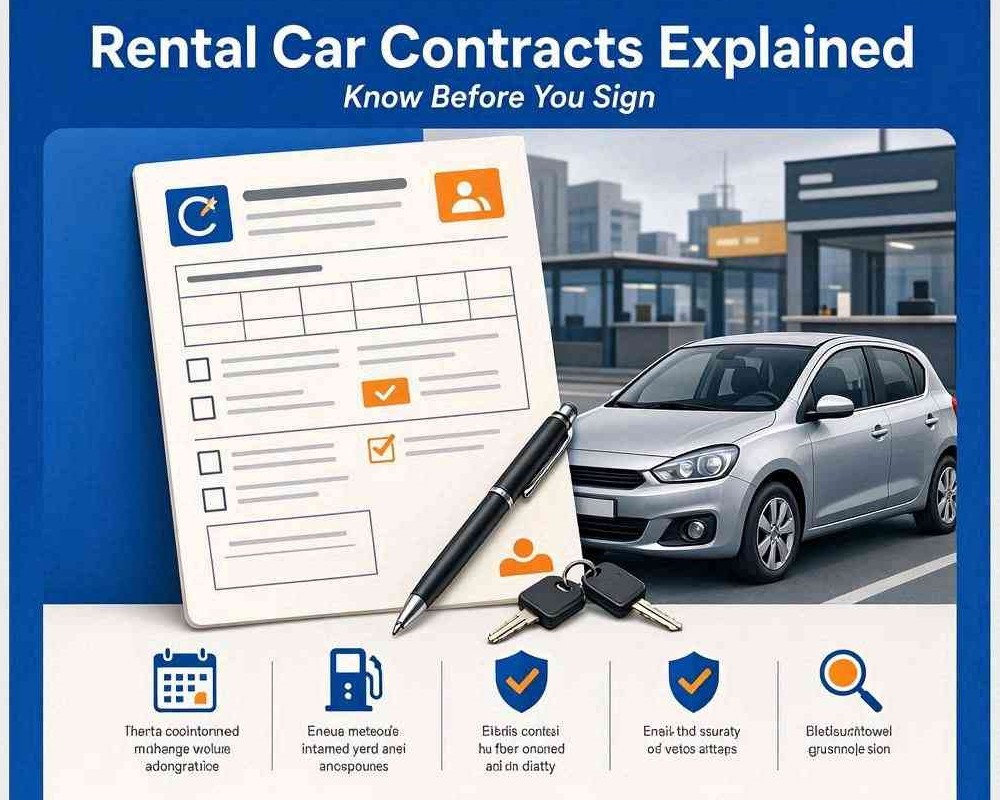
You don’t need to memorize legal language. You need clear answers about money, risk, and procedure. Ask:
- What are the mandatory fees and taxes in my final total?
- What is the deposit amount and when is it released?
- If I decline the waiver, what am I still responsible for?
- What fuel policy do I have, and what happens if I return slightly under?
- How is damage assessed, and what is considered normal wear?
- Is there a late return grace period and how is it billed?
Final Tip: Keep It Simple and Document Everything
Understanding a rental car contract is about reducing uncertainty. Focus on the sections that affect your wallet: coverage scope, deposits, fuel rules, late return terms, and how damages are handled. Then document the car condition at pick-up and return. With that approach, the contract becomes a checklist instead of a source of anxiety.
