Rental cars have changed dramatically over the past decade. What used to be a basic transportation option is now often equipped with advanced safety systems, smartphone integration, digital controls, and connected services. Whether you are renting for a business trip, vacation, road trip, or temporary replacement vehicle, understanding available technology upgrades can help you choose a car that is safer, easier to drive, and more comfortable.
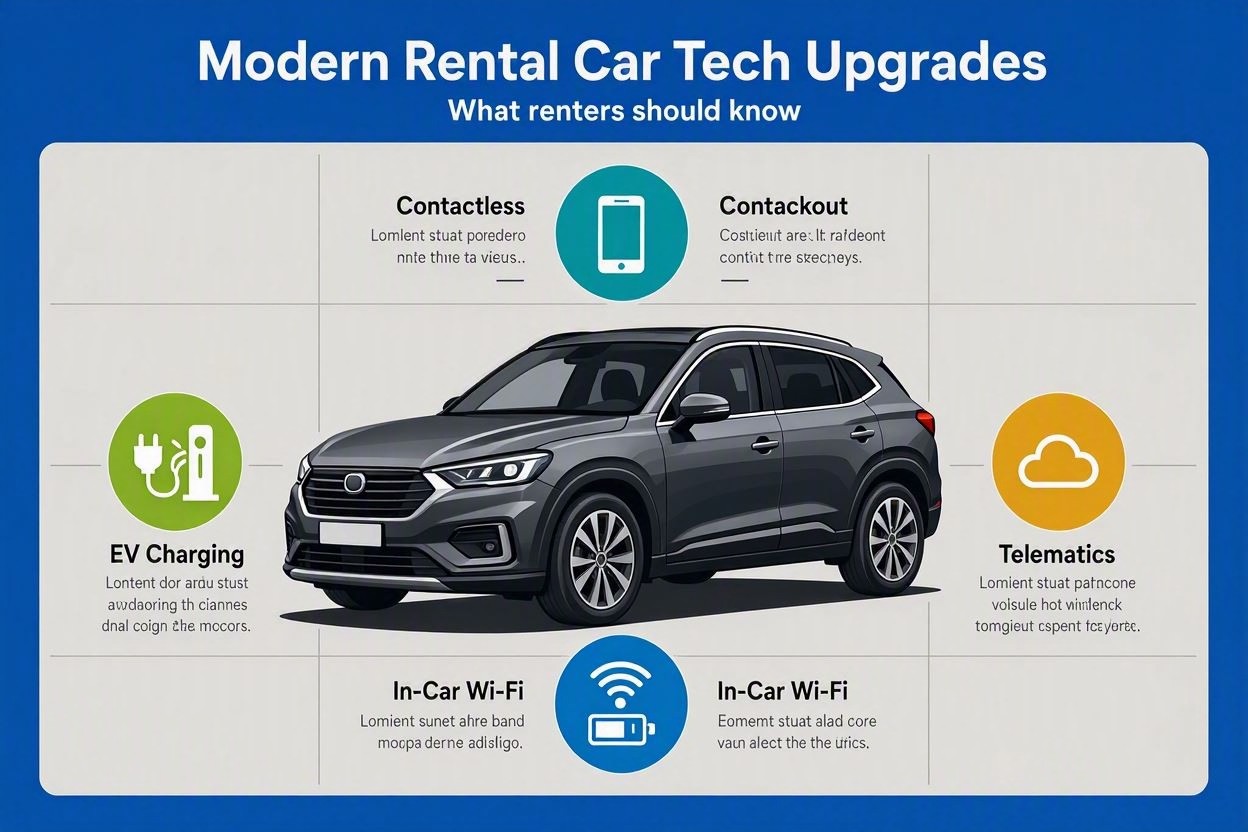
Not every rental model includes the same features, and availability can vary by location, vehicle class, and rental company. However, many modern fleets now offer technology packages that were once limited to premium vehicles. The key is knowing which features matter most for your route, driving environment, and personal preferences.
Advanced Driver Assistance Features
Safety technology is one of the most valuable upgrades in rental vehicles. These systems do not replace attentive driving, but they can reduce fatigue, improve awareness, and help prevent common road incidents.
Adaptive Cruise Control
Adaptive cruise control automatically adjusts speed to help maintain a set distance from the vehicle ahead. It is especially useful on highways, long-distance trips, and busy intercity routes. In some vehicles, the system can bring the car to a complete stop in traffic and resume movement when conditions allow.
Lane Support Systems
Lane departure warning alerts the driver when the vehicle begins drifting out of its lane without signaling. More advanced lane keeping assist can gently steer the vehicle back toward the center of the lane. These features are helpful on unfamiliar roads, late-night drives, or extended highway journeys.
Blind Spot Monitoring
Blind spot monitoring uses sensors to detect vehicles in adjacent lanes. Most systems display a warning light in the side mirror and may sound an alert if you signal while another vehicle is nearby. For renters driving a larger SUV, van, or unfamiliar sedan, this upgrade can provide extra confidence when changing lanes.
Connectivity and Smartphone Integration
Modern renters expect their vehicle to work smoothly with their devices. Connectivity features can make navigation, communication, and entertainment easier without relying on unsafe phone handling.
Apple CarPlay and Android Auto
Apple CarPlay and Android Auto mirror key smartphone functions on the vehicle display. Drivers can access maps, messages, calls, music, podcasts, and voice assistants through the infotainment system. This is one of the most practical upgrades for travelers because it allows familiar apps to be used in an unfamiliar car.
Bluetooth and USB Options
Bluetooth is now common in rental fleets, but USB-C ports, multiple charging points, and wireless charging pads are not always guaranteed. If several passengers need to charge devices, check whether the vehicle has front and rear charging access. This is particularly important for family trips and business travel.
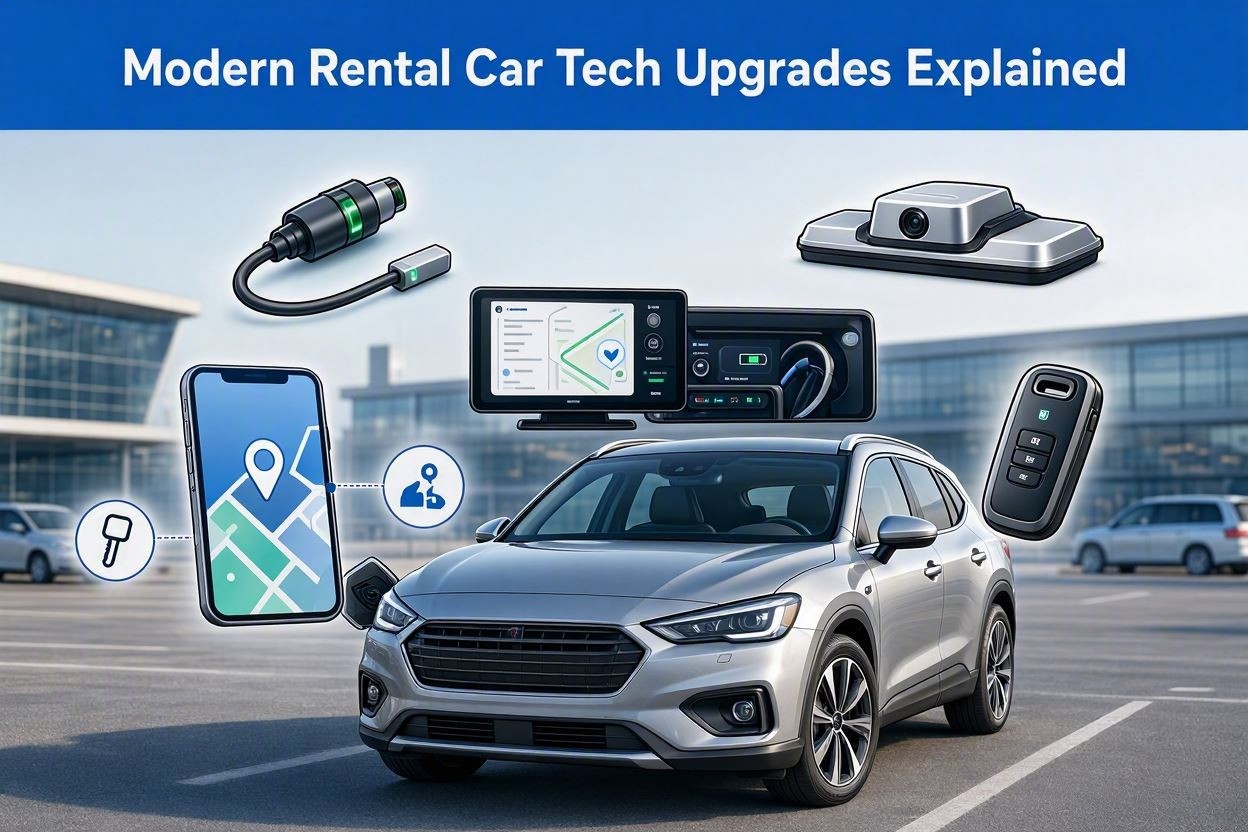
Navigation and Route Intelligence
Even with smartphone maps, built-in navigation can be useful when cell signal is weak or when the rental vehicle includes real-time traffic data. Some systems also integrate with the driver display, showing turn-by-turn directions directly behind the steering wheel.
- Real-time traffic rerouting helps avoid delays in congested areas.
- Voice-guided navigation reduces the need to look away from the road.
- Points of interest can help locate fuel stations, hotels, parking, and restaurants.
- EV-specific route planning can identify compatible charging stations.
Electric and Hybrid Vehicle Technology
As rental companies add electric and hybrid vehicles to their fleets, renters have access to new efficiency tools. These models often include displays that show battery range, energy use, regenerative braking activity, and nearby charging locations.
Charging Guidance
Electric rental cars may offer built-in charging station search, plug compatibility details, and estimated charging times. Before choosing an EV rental, ask about charging cables, payment networks, return charge requirements, and whether the vehicle supports fast charging.
Regenerative Braking Modes
Many hybrid and electric vehicles allow drivers to adjust regenerative braking. Stronger settings can recover more energy and reduce brake wear, while lighter settings feel closer to a traditional gasoline vehicle. If you are new to EVs, spend a few minutes understanding these modes before leaving the rental lot.
Comfort and Convenience Upgrades
Technology is not only about safety and navigation. Comfort upgrades can make a major difference during long drives, especially when traveling with passengers or luggage.
- Keyless entry and push-button start simplify access and reduce key handling.
- Dual-zone or tri-zone climate control helps passengers set different temperatures.
- Heated and ventilated seats improve comfort in extreme weather.
- Power liftgates make loading luggage easier in SUVs and crossovers.
- Digital rearview mirrors can improve visibility when the cargo area is full.
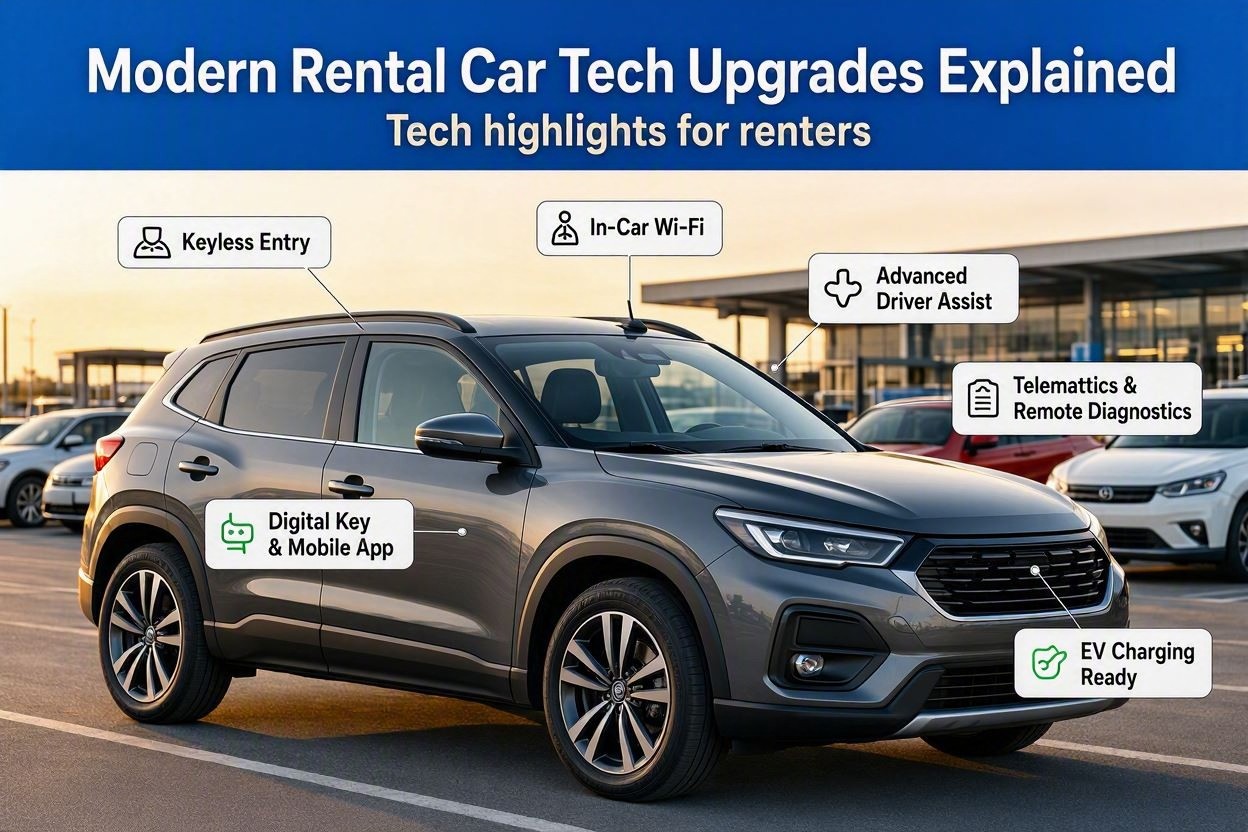
Parking and Camera Systems
Parking technology is especially useful in cities, airports, hotels, and unfamiliar neighborhoods. A rearview camera is now standard in many markets, but rental vehicles may also include upgraded camera systems.
360-Degree Camera Views
A 360-degree camera system combines images from multiple cameras to create a bird's-eye view around the car. This helps when maneuvering in tight parking lots, avoiding curbs, or navigating narrow rental garage exits.
Parking Sensors and Automatic Parking
Parking sensors warn when the vehicle is close to an obstacle. Some vehicles also include semi-automatic parking assistance, which can steer into a parallel or perpendicular space while the driver controls speed and braking. These features are valuable for renters who are not used to the vehicle's size.
Security and Telematics Features
Many modern rental vehicles include connected security technology. Telematics systems can help rental companies locate vehicles, monitor maintenance needs, and support emergency services. Some cars include automatic collision notification, stolen vehicle assistance, or roadside support buttons.
From a renter's perspective, these features can provide reassurance, but it is important to understand privacy policies. Rental companies may collect vehicle location, mileage, fuel or charge level, diagnostic alerts, and driving-related data. Review the agreement if data handling is a concern.
How to Choose the Right Tech Package
The best technology upgrade depends on how and where you plan to drive. For highway travel, prioritize adaptive cruise control, lane support, and comfortable seating. For urban trips, choose parking sensors, a compact body style, and smartphone integration. For remote areas, built-in navigation and multiple charging ports can be more useful than luxury features.
Before confirming your reservation, compare vehicle classes rather than focusing only on the lowest rate. Ask which features are available, whether they are guaranteed, and if a specific model can be reserved. On pickup, take a few minutes to pair your phone, adjust safety settings, locate charging ports, and test the camera system. A short setup at the start can make the entire rental experience smoother, safer, and more enjoyable.
