Renting a car should never mean accepting unknown safety standards. Whether you are driving in a new city, taking a family road trip, or booking a vehicle for business travel, the right safety features can reduce risk, improve comfort, and help you react faster in unexpected situations. Rental fleets vary widely by location, vehicle class, and availability, so it is smart to ask for specific features before you sign the agreement and drive away.
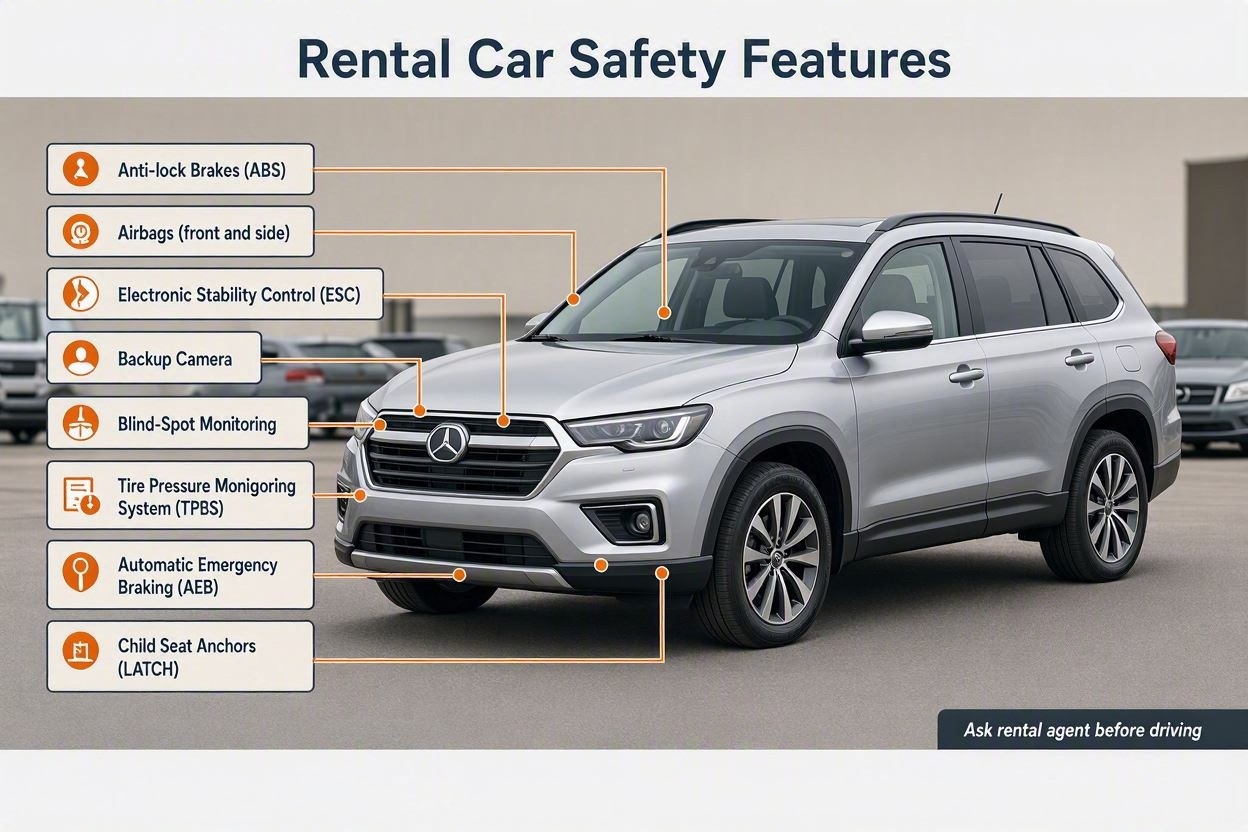
Why Safety Features Matter in a Rental Car
A rental car is unfamiliar by nature. You may not know its braking feel, blind spots, dashboard controls, or handling until you are already in traffic. Modern safety systems help close that gap by warning you about hazards, supporting emergency maneuvers, and improving visibility. They are especially valuable when you are driving on unfamiliar roads, in bad weather, at night, or with passengers who depend on you.
Do not assume every late-model rental has the same equipment. Two cars from the same manufacturer can have different trim levels and safety packages. Before pickup, call the rental branch and ask what features are available in your reserved category. At the counter, confirm the actual vehicle includes them.
Essential Safety Features to Request
Electronic Stability Control
Electronic stability control helps prevent skidding and loss of control by automatically applying braking to individual wheels when the vehicle begins to slide. This feature is especially important on wet roads, icy surfaces, gravel, and sharp curves. It is now common in many markets, but you should still confirm it is active and that no warning light appears on the dashboard.
Anti-Lock Braking System
Anti-lock braking system, often called ABS, helps you maintain steering control during hard braking. Without ABS, wheels can lock and the car may skid in a straight line. With ABS, you can press the brake firmly while steering away from danger. If you expect mountain roads, heavy traffic, or frequent rain, ABS is not optional - it is a basic safety requirement.
Advanced Airbag Protection
Ask about front, side, and curtain airbags. Front airbags protect the driver and front passenger in frontal crashes, while side and curtain airbags help protect occupants during side impacts and rollovers. If you are traveling with several passengers, make sure protection extends beyond the front row, especially in SUVs, minivans, and larger vehicles.
Driver Assistance Systems Worth Asking For
Blind Spot Monitoring
Blind spot monitoring is one of the most useful features in a rental car because you are not yet familiar with the vehicle's sight lines. The system warns you when another vehicle is in the lane beside you, often with a light in the side mirror and sometimes an audible alert. This is particularly helpful on highways, multi-lane urban roads, and in countries where traffic patterns differ from what you are used to.
Forward Collision Warning and Automatic Emergency Braking
Forward collision warning alerts you if you are approaching a vehicle or obstacle too quickly. Automatic emergency braking can apply the brakes if you fail to respond in time. These systems cannot replace attentive driving, but they can reduce the severity of a crash or help avoid one altogether. Request them if you will be driving in stop-and-go traffic, tourist areas, or busy downtown streets.
Lane Departure Warning and Lane Keeping Assist
Lane departure warning notifies you if the car drifts out of its lane without signaling. Lane keeping assist may gently steer the vehicle back toward the center of the lane. These features are useful on long highway trips, but they should never be treated as autopilot. Ask the rental agent how to turn alerts on and off, since controls differ by model.
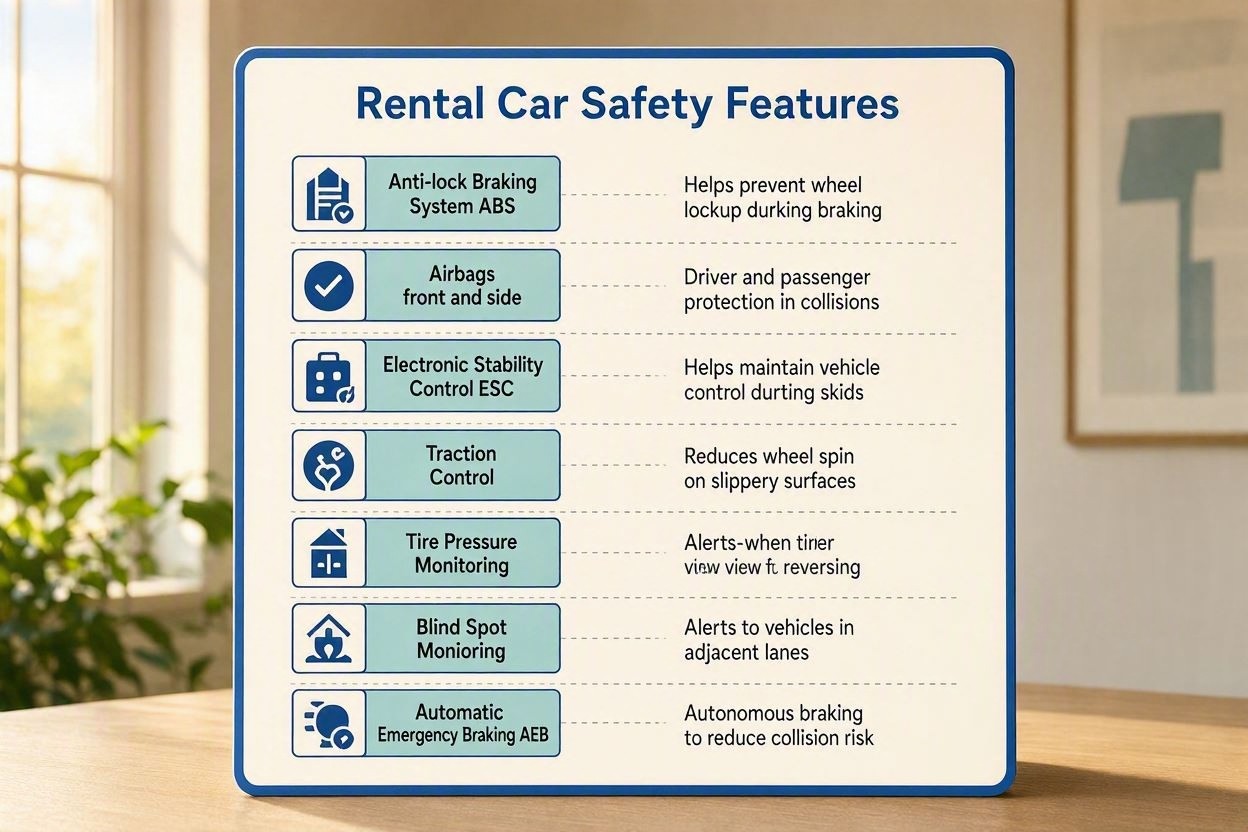
Visibility and Awareness Features
Rearview Camera and Parking Sensors
A rearview camera is extremely valuable when backing out of tight hotel lots, airport garages, or unfamiliar driveways. Parking sensors add another layer of protection by warning you when you are close to an object. If you are renting a larger vehicle than you normally drive, such as an SUV, van, or pickup, make these features a priority.
Adaptive Headlights and Fog Lights
Good lighting is a major safety factor. Adaptive headlights can turn slightly with the steering wheel to improve visibility on curves. Fog lights help in mist, rain, or snow, though they must be used properly. If your trip includes rural roads, late-night driving, or poor weather, inspect the headlights before leaving the lot and ask for another vehicle if they are dim, damaged, or misaligned.
Family and Passenger Safety Equipment
If you are traveling with children, safety needs become more specific. Rental companies may offer child seats, but availability and condition can vary. Reserve child equipment in advance and inspect it carefully at pickup. Confirm it is appropriate for your child's age, height, and weight, and make sure you know how to install it securely.
- Request a rear-facing seat for infants and younger toddlers when required.
- Use a forward-facing seat with a harness for older toddlers and preschoolers.
- Ask for a booster seat for children who are too large for a harness but too small for an adult belt.
- Check that seat belts lock properly and are not twisted, frayed, or damaged.
Vehicle Condition Checks Before You Drive
Tires and Tire Pressure
Even the best safety technology cannot compensate for worn or underinflated tires. Walk around the vehicle and inspect tread depth, visible damage, bulges, and uneven wear. Ask the rental company to confirm tire pressure, including the spare if the vehicle has one. In winter destinations, ask whether the car has winter tires rather than standard all-season tires.
Emergency Kit and Roadside Support
Ask whether the car includes a spare tire or tire repair kit, jack, warning triangle, reflective vest, flashlight, and basic first aid kit. Some regions legally require certain emergency items. Also confirm the roadside assistance number and what to do after a breakdown, flat tire, accident, or warning light.
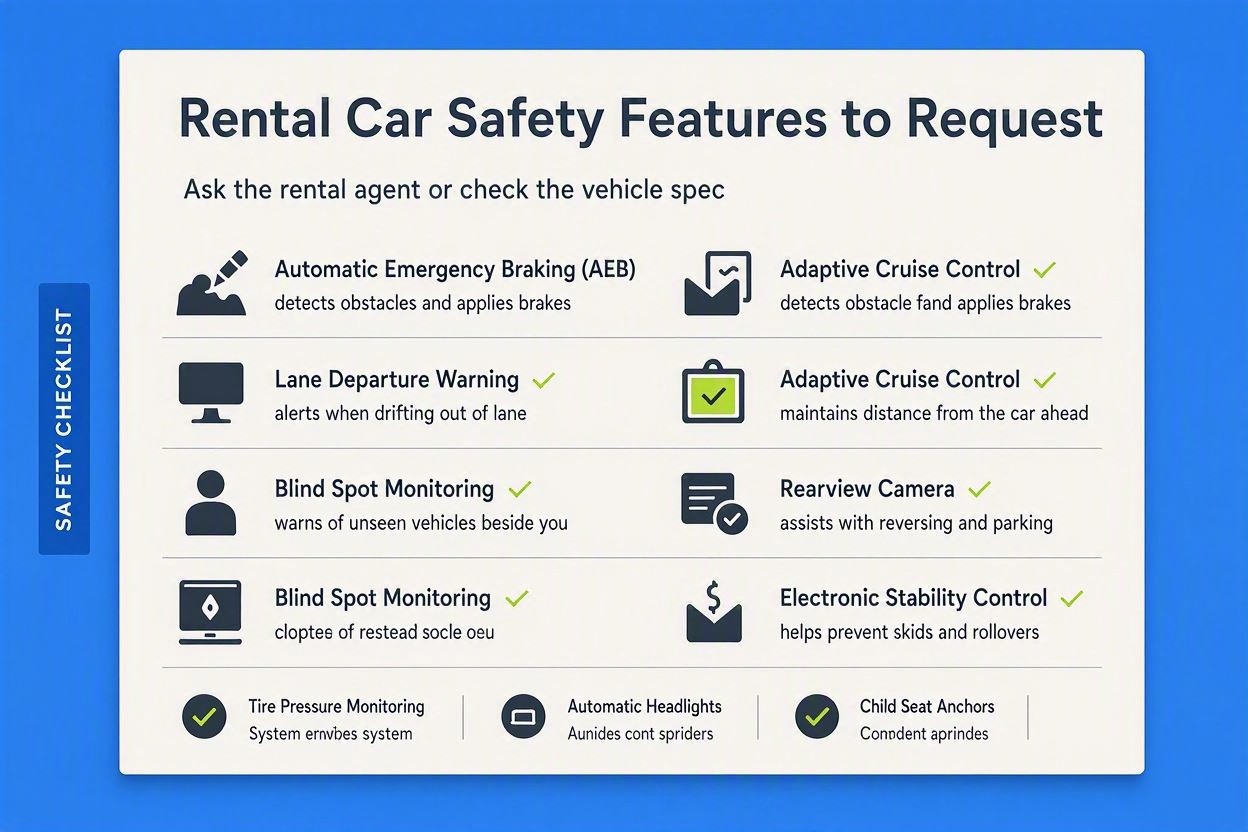
Quick Pickup Checklist
- Confirm ABS, stability control, airbags, and tire condition.
- Ask for blind spot monitoring, automatic emergency braking, and lane alerts if available.
- Test headlights, brake lights, turn signals, wipers, and mirrors.
- Check the fuel level, dashboard warning lights, and mileage.
- Photograph existing damage before leaving the rental lot.
- Adjust the seat, mirrors, steering wheel, and navigation before entering traffic.
Final Advice
The safest rental car is not simply the newest or most expensive one. It is the vehicle that fits your route, passengers, weather, and driving experience. Request key safety features early, verify them at pickup, and do a quick inspection before you leave. A few extra minutes at the counter can make your trip safer, calmer, and far less stressful.
