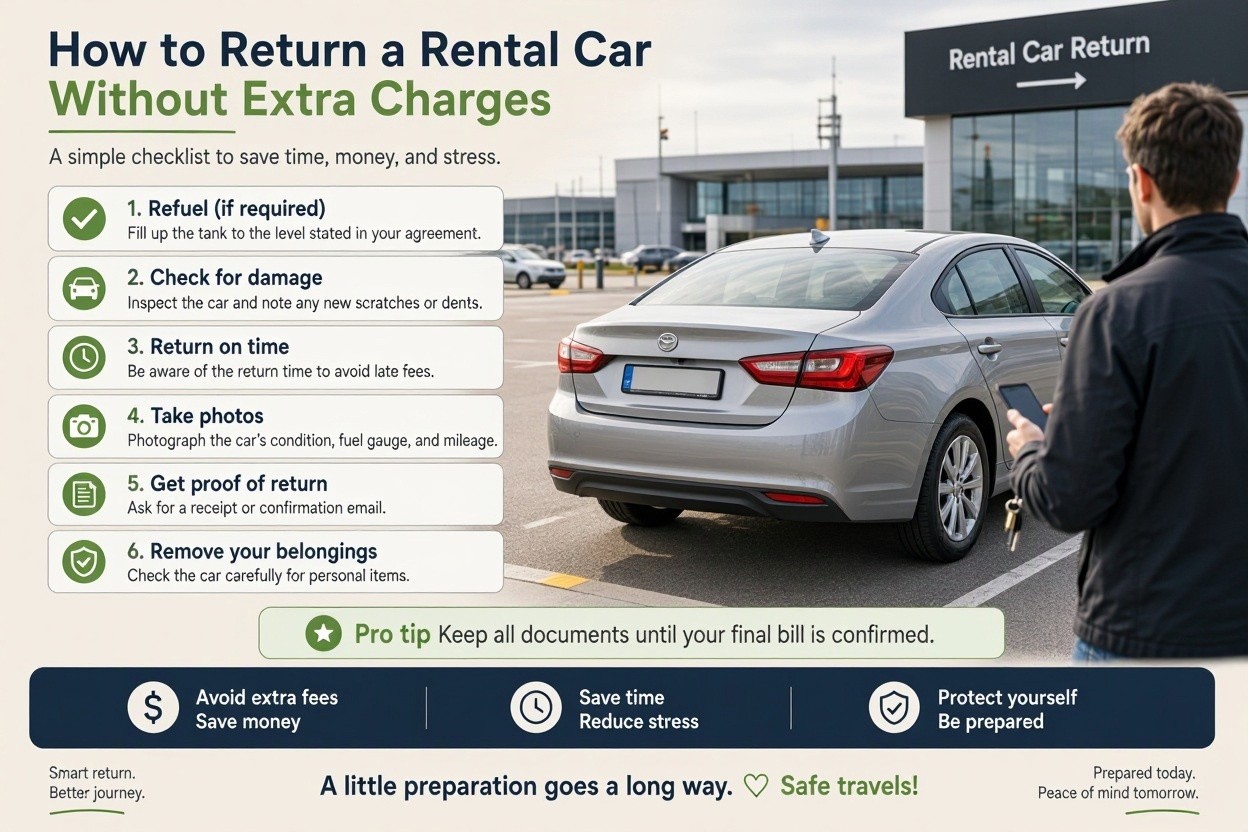
Returning a rental car should be a straightforward process, but unexpected charges can quickly increase the total cost of your trip. Fuel penalties, cleaning fees, late returns, and disputes over vehicle damage are among the common reasons travelers receive additional bills.
Fortunately, most avoidable rental car charges can be prevented with careful preparation. Understanding the return conditions and documenting the vehicle's condition will help you complete the rental without unnecessary expenses.
Review Your Rental Agreement Before Returning
Every rental company has its own return policies. Before heading to the drop-off location, review the agreement to confirm the return deadline, designated location, fuel requirements, and mileage restrictions.
Pay particular attention to whether the company offers a grace period for late returns. Some providers allow a short delay, while others may charge for additional rental time.
Return the Car on Time
Late returns can result in additional hourly or daily charges. In some cases, returning a vehicle substantially later than scheduled may also affect insurance coverage or other contractual conditions.
Plan your journey to the rental location with enough time for traffic, refueling, and the vehicle inspection.
If you expect to be late, contact the rental company before the agreed return time. Requesting an extension in advance may be less expensive than arriving unexpectedly after the deadline.
Follow the Fuel Policy Exactly
Fuel-related charges are among the easiest expenses to avoid. Many rental companies operate a full-to-full policy, requiring customers to return the vehicle with the same full tank provided at pickup.
Other agreements may require a specific fuel level or include prepaid fuel arrangements.
To avoid penalties:
- Check the fuel level recorded at pickup.
- Refuel near the return location when appropriate.
- Use the correct fuel type.
- Keep the final fuel receipt.
- Photograph the fuel gauge before returning the keys.
Rental companies may charge a premium refueling rate and an additional service fee when vehicles are returned below the required level.
Inspect the Vehicle for New Damage
Before returning the rental car, inspect the exterior and interior carefully. Look for scratches, dents, cracked glass, wheel damage, and other visible problems.
Compare the vehicle's condition with photographs taken at pickup and the original inspection report.
If damage occurred during the rental, report it according to the company's procedures rather than leaving it undisclosed.
Take Photos Before Handing Over the Keys
Photographic documentation can be particularly useful if a damage dispute arises after the return.
Capture clear images of all sides of the vehicle, the wheels, windshield, interior, dashboard, and fuel gauge. Include the odometer reading and, when practical, a timestamped record of the return.
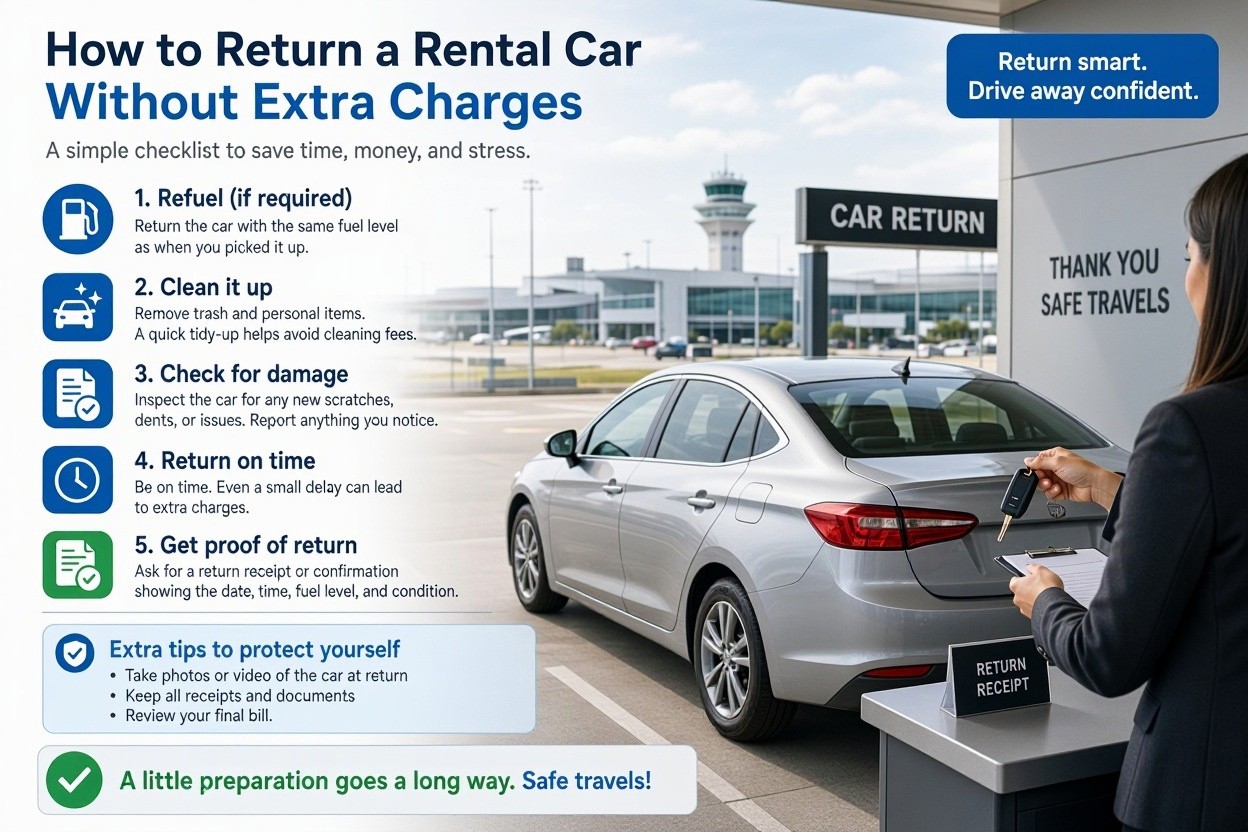
Remove Trash and Personal Belongings
Rental companies generally expect vehicles to be returned in reasonably clean condition. Normal dirt from ordinary use is often acceptable, but excessive mess may trigger additional cleaning charges.
Remove food packaging, bottles, personal items, and other rubbish. Check beneath the seats, inside storage compartments, and in the trunk.
Smoking-related odors, pet hair, and significant stains may result in specialized cleaning fees depending on the rental terms.
Check Mileage and Geographic Restrictions
Some rental agreements include unlimited mileage, while others impose a daily or total distance allowance.
Exceeding the permitted mileage can result in additional charges calculated per mile or kilometer.
Also verify whether the vehicle was driven within permitted geographic boundaries. Unauthorized cross-border travel or use on restricted roads may create contractual penalties.
Return the Car to the Correct Location
Returning a vehicle to a different branch may involve a one-way rental fee, even when the alternative location belongs to the same company.
Confirm the exact return address, especially at airports where rental facilities may be separate from passenger terminals.
If you need to change the drop-off location, request approval and confirm the revised price before returning the vehicle.
Request a Final Inspection and Receipt
Whenever possible, complete the return inspection with a rental company employee.
Ask for written confirmation that the vehicle was returned, including the recorded mileage, fuel level, condition, and return time.
Review the final invoice for unexpected charges before leaving.

Be Careful with After-Hours Returns
Some rental locations allow customers to leave vehicles outside normal business hours using designated parking spaces and key drop boxes.
However, responsibility for the vehicle may continue until the company formally checks it in, depending on the rental agreement.
Take comprehensive photographs, follow the return instructions precisely, and retain evidence of when and where the vehicle was left.
Monitor Your Security Deposit
After returning the vehicle, check your payment card for final charges and the release of any security authorization.
Deposit release times vary depending on the rental company, bank, and payment method.
If an unexpected charge appears, request an itemized explanation and supporting documentation before disputing it.
Conclusion: A Careful Return Prevents Unexpected Costs
Returning a rental car without extra charges requires more than simply handing over the keys. Following fuel requirements, respecting return deadlines, checking vehicle condition, and keeping documentation can prevent many common disputes.
Whenever possible, obtain a final inspection report and retain your rental records until all payments and deposit authorizations are settled.
With a few practical precautions, you can finish your rental experience confidently and avoid paying more than originally planned.
